
Printing & Paper Industries
Conveyor belting for the printing and paper industries.
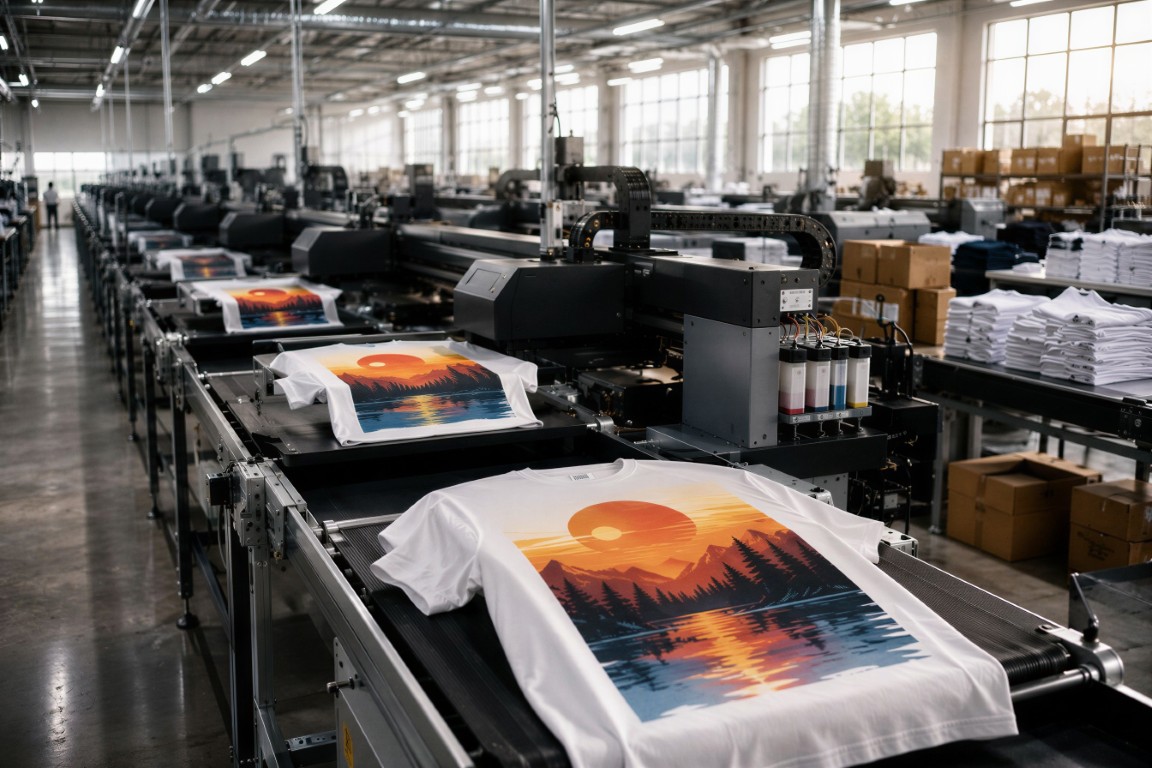
Printing and paper
Belting for the printing and paper processing industries prioritizes precision handling of sheets, webs, or boards at high speeds without marking, smearing ink, scuffing, or causing static issues. Key requirements include non-marking surfaces, consistent grip/friction control, low elongation for accurate tracking, abrasion resistance (from paper dust/edges), resistance to inks/chemicals/oils, anti-static properties, and easy cleaning. Belts often run on slider beds or with vacuum/suction features.
Applications span commercial/digital/offset/flexographic printing, paper converting (sheeting, laminating, die-cutting, rewinding), corrugated box making (folder-gluers), finishing/bindery, and related processes like stacking or slow-down.
Common Belt Types and Materials
Here are the primary categories used:
Machine Tapes / Folder-Gluer Belts
These are thin, high-performance flat belts (often nylon- or polyester-core with elastomer covers) for feeding, folding, gluing, and transporting sheets/boards.
Materials: Nylon-core with abrasion-resistant rubber/NBR covers; polyurethane (TPU/PU); polyester fabric with elastomer impregnation. Quick-splice designs (finger, skive, or thermoplastic) enable fast installation.
Benefits: Consistent grip without marking or ink smearing; high tear resistance (handles jams); dimensional stability and long life at high speeds; anti-static options available. Thicknesses typically 1–6 mm depending on board weight (lighter for thin stock, thicker for heavy corrugated).
Uses: Folder-gluers, feeders, sheeters, layboys, counter-ejectors, folding rails. Brands/examples include Nitta XH/XVT/FG-series, Habasit machine tapes, Chiorino PT-series.
PVC and TPU/PU Conveyor Belts
Lightweight thermoplastic belts for general transport, accumulation, and stacking.
Materials: Multi-ply polyester carcass with PVC or TPU covers (smooth, textured, or low-friction). White/light-colored non-marking grades preferred.
Benefits: Affordable; good abrasion and dimensional stability; consistent coefficient of friction for reliable conveying; easy to clean; non-marking to protect paper/coatings; anti-static versions reduce dust attraction. TPU offers better cut/abrasion resistance and oil resistance than PVC.
Uses: Sheet transport, packaging lines, light converting, slider-table applications, accumulation. Suitable for dry or lightly oily environments.
Elastomer-Covered / Rubber Belts
Fabric or nylon-core belts with specialised rubber or elastomer covers for higher grip or durability.
Materials: NBR, natural rubber, or synthetic elastomers on fabric/nylon carcass; sometimes rough-top or textured surfaces.
Benefits: Strong, consistent grip for precise insertion/processing; high abrasion resistance; good for high-duty cycles; tear resistance in jam-prone areas.
Uses: Printing presses (feed/delivery), stackers, certain converting stations. Rough-top variants help grip light/slippery sheets; smooth for higher speeds or uniform loads.
Power Transmission / Drive Belts
Flat or timing belts that power rollers, pulleys, and synchronized drives.
Materials: Nylon-core flat belts (PT/S-series); polyurethane or neoprene timing belts (HTD, GT, AT profiles).
Benefits: Reliable power transmission with low stretch; precise synchronization for cut/fold registration; interchangeable styles available in multiple thicknesses/widths.
Uses: Drive systems on presses, sheeters, slitters, folders, corrugators.
Steel Belts (especially for digital/high-precision printing)
Thin stainless steel (martensitic grades) belts, solid or perforated.
Benefits: Exceptional flatness, straightness, and stability (vibration up to 3–6× lower than plastic belts in tests); high tensile strength/low stretch; excellent wear resistance and cleanability (even UV inks); heat tolerance up to ~300°C for drying steps; long life. Thicknesses typically 0.4–1.2 mm.
Uses: High-speed digital inkjet printing conveyors where substrate positioning precision is critical for print quality. Tracking systems achieve accuracy to <0.01 mm.
Specialty Belts
Vacuum/suction or perforated belts: For holding sheets securely (e.g., feeders, slow-down belts at delivery/stacking). Materials match the above with precise hole patterns.
Anti-static belts: Critical in digital printing and dusty environments to prevent static buildup.
Corrugator belts: Heavy synthetic/aramid constructions (sometimes silicone-coated) for high-temperature/traction needs in corrugated board production.
PTFE-coated mesh or aramid/Nomex: More common in textile printing dryers (heat up to 230°C+), but occasionally relevant for paper drying/heat processes. Open mesh allows airflow.
Key Selection Factors
Non-marking & surface properties — Smooth or controlled-friction covers protect printed surfaces, coatings, and edges. Avoid anything that scuffs or leaves residue.
Speed & precision — Low elongation and stable tracking are essential (high-speed presses can exceed 15,000–21,000 sheets/hour).
Environment — Resistance to paper dust, inks, solvents, moisture, and static. Easy cleaning reduces contamination.
Joint type — Endless, finger-splice, or quick mechanical for minimal downtime.
Application-specific — Folder-gluers need high-grip non-marking tapes; digital presses may favor steel for stability; converting needs precise tension control.
Need Help Specifying the Right Belt?
Contact Us Today?
Send us your dimensions, temperature, product or machine details.
Inert Belting
Specialist conveyor belting, coated materials, fabrication and installation.