
Material Types

Conveyor belts are made from a range of materials (or combinations of covers + carcass/reinforcement), chosen based on load, abrasion, temperature, chemicals/oils, hygiene needs, incline, and cost.
The main categories are rubber (with fabric or steel-cord reinforcement), thermoplastics like PVC and polyurethane (PU), modular plastics, metal (mesh or wire), and specialty compounds (silicone, PTFE, etc.). Here is a breakdown of the primary materials, their key benefits, typical uses, and main limitations.

Rubber (Natural, SBR, NBR/Nitrile, Neoprene, EPDM, etc.)
- Construction: Usually multi-ply fabric carcass (polyester-nylon/EP or nylon-nylon/NN) or steel-cord reinforced, with rubber covers.
- Benefits: Excellent abrasion, impact, and cut/gouge resistance; high tensile strength and load capacity; good flexibility and shock absorption; can handle heavy bulk materials; specialized grades for heat (up to ~200–250°C / 400–480°F or higher with special compounds), oil/fat resistance (NBR), fire resistance (self-extinguishing for mining), and cold. Steel-cord versions offer very low elongation for long-distance/high-tension conveyors.
- Best for: Mining, quarries, aggregates, cement, bulk solids, heavy industrial handling, inclined/chevron belts.
- Limitations: Heavier and less hygienic than plastics (harder to clean thoroughly); standard grades degrade with oils/solvents; not ideal for direct food contact without special FDA compounds; higher energy use on some systems.
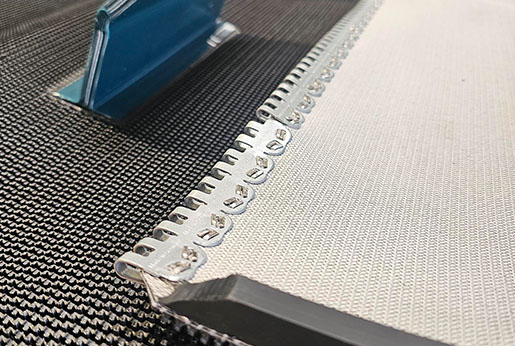
PVC (Polyvinyl Chloride)
-
- Construction: Multi-ply polyester fabric carcass with PVC covers (smooth, textured, or interwoven).
- Benefits: Lightweight, flexible, affordable; good moisture, chemical, and moderate oil resistance; easy to clean and join; quieter and runs on smaller pulleys; FDA-compliant grades available for non-meat/dry food or packaging; versatile surface options (smooth, anti-static, etc.).
- Best for: Packaging, logistics, distribution, light-to-medium manufacturing, dry food handling, general package conveying.
- Limitations: Moderate abrasion and impact resistance (not for heavy bulk or sharp materials); limited heat tolerance (typically up to ~70–80°C / 160–180°F); can soften or degrade with certain oils/solvents or prolonged UV; less durable under heavy continuous loads than rubber or PU.

Polyurethane (PU / TPU)
- Construction: Thermoplastic polyurethane covers (monolithic or fabric-reinforced); often smoother and non-porous.
- Benefits: Superior abrasion, cut, and tear resistance compared with PVC; excellent oil/grease and chemical resistance; high tensile strength and elasticity; outstanding hygiene and cleanability (non-porous surface resists bacteria); FDA/EU food-contact compliant; good dimensional stability and flexibility for complex routing or small pulleys; longer service life in abrasive or oily applications.
- Best for: Food processing (meat, dairy, bakery, sticky/oily products), pharmaceuticals, packaging with sharp edges, recycling of abrasive materials, precision handling.
- Limitations: Higher cost than PVC; temperature range typically –20 to ~90–100°C (up to ~220°F in some grades); not the strongest choice for extreme heavy bulk impact or very long high-tension runs.
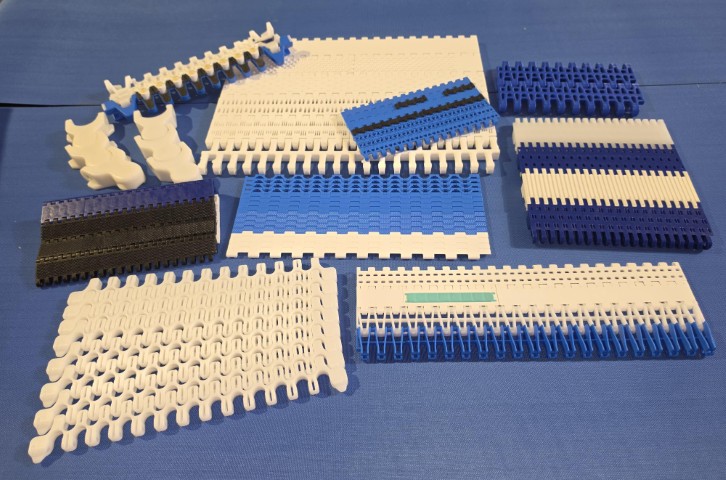
Modular Plastic Belts
- Construction: Interlocking plastic modules (usually polypropylene/PP, polyethylene/PE, acetal, or higher-temp resins like PEEK) driven by sprockets.
- Benefits: Extremely easy to clean and maintain (individual modules replaceable); excellent for wash-down and hygienic environments; handles curves, inclines, and complex layouts well; good chemical and moisture resistance; available in open-grid designs for drainage/cooling/airflow; durable in wet or food environments.
- Best for: Food processing (especially wet/wash-down), bottling, packaging lines needing curves or frequent sanitation, light-to-medium duty with complex routing.
- Limitations: Higher upfront cost; less suitable for very heavy continuous bulk loads or extreme abrasion compared with rubber; module hinges can trap debris if not designed properly.
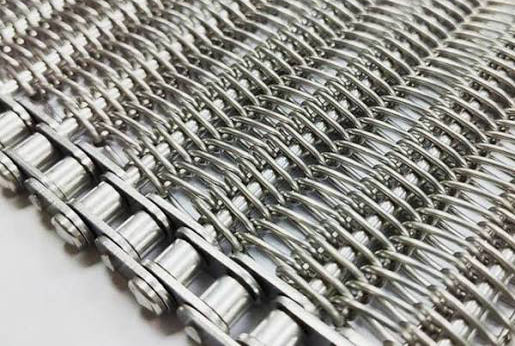
Metal (Stainless Steel or Carbon Steel Mesh/Wire Belts)
- Construction: Woven wire mesh, balanced weave, or flat-wire styles; often stainless (304/316) for corrosion resistance.
- Benefits: Outstanding high-temperature resistance (up to 400°C+ / 750°F+ or higher depending on alloy); excellent strength, durability, and abrasion resistance; allows airflow, drainage, or product contact with heat/cold; corrosion-resistant options; long service life in harsh conditions; easy to sanitize in open designs.
- Best for: Baking ovens, fryers, freezers, high-heat processing, metalworking, heavy wash-down, glass or sharp-product handling, food where airflow is needed.
- Limitations: Heavier, less flexible, and more expensive; noisier; not ideal for very fine or sticky products that can fall through mesh; higher energy to drive.

Specialty Materials
- Silicone: Excellent temperature flexibility (very low to high, e.g., –60 to 200°C+); non-stick and good release properties. Used in bakeries, freezing, or heat-sensitive applications. Lower abrasion resistance than PU/rubber.
- PTFE (Teflon-coated or pure): Extreme non-stick, chemical resistance, and heat tolerance (up to ~260°C / 500°F). Ideal for bakery, drying ovens, or sticky products. Expensive.
- Fabric-only or hybrid (canvas, cotton, aramid/Kevlar): Lightweight and flexible for lighter packaging or specialty uses; aramid for high-strength/low-stretch or heat.
- Leather (rare/traditional): Good grip and shock absorption in some specialty or hybrid applications.
Quick Selection Guidance
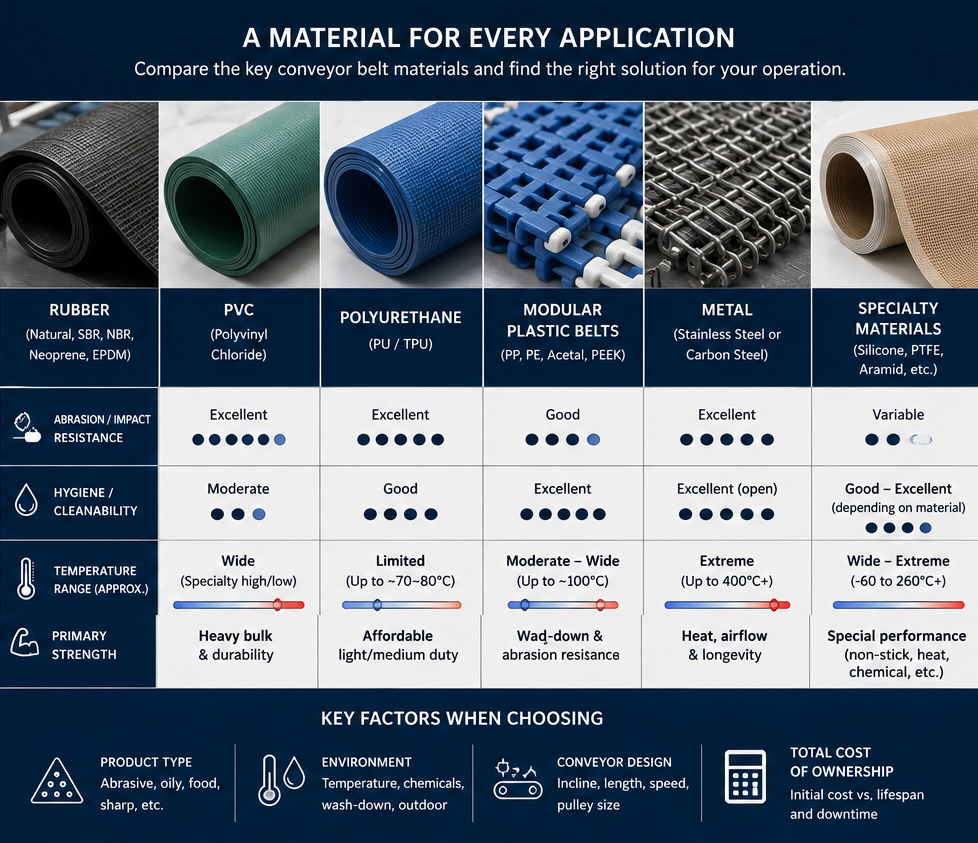
| Material | Abrasion/Impact | Hygiene/Cleanability | Temp Range (approx.) | Cost | Primary Strength |
| Rubber | Excellent | Moderate | Wide (specialty high/low) | Moderate | Heavy bulk & durability |
| PVC | Moderate | Good | Limited | Low | Affordable light/medium duty |
| PU | Excellent | Excellent | Moderate-wide | Higher | Food, oil, abrasion resistance |
| Modular Plastic | Good | Excellent | Moderate-wide | Higher | Wash-down & complex layouts |
| Metal Mesh | Excellent | Excellent (open) | Extreme | High | Heat, airflow, longevity |
Key factors when choosing:
Product type (abrasive, oily, food, sharp), environment (temperature, chemicals, wash-down, outdoor), conveyor design (incline, length, speed, pulley size), and total cost of ownership (initial price vs. lifespan and downtime). Many belts combine materials (e.g., rubber covers on fabric carcass, or PU on polyester). Always match the cover compound and carcass strength to the specific application—consult manufacturer specs or engineers for critical uses (food safety certifications, fire resistance, etc.).
Modular Plastic Belts
- Construction: Interlocking plastic modules (usually polypropylene/PP, polyethylene/PE, acetal, or higher-temp resins like PEEK) driven by sprockets.
- Benefits: Extremely easy to clean and maintain (individual modules replaceable); excellent for wash-down and hygienic environments; handles curves, inclines, and complex layouts well; good chemical and moisture resistance; available in open-grid designs for drainage/cooling/airflow; durable in wet or food environments.
- Best for: Food processing (especially wet/wash-down), bottling, packaging lines needing curves or frequent sanitation, light-to-medium duty with complex routing.
- Limitations: Higher upfront cost; less suitable for very heavy continuous bulk loads or extreme abrasion compared with rubber; module hinges can trap debris if not designed properly.
READY TO TALK?
Need help specifying the right belt?
Send us your dimensions, temperature, product or machine details.
Inert Belting
Specialist conveyor belting, coated materials, fabrication and installation.